Tupelo Trees: The Source of Authentic Raw Tupelo Honey
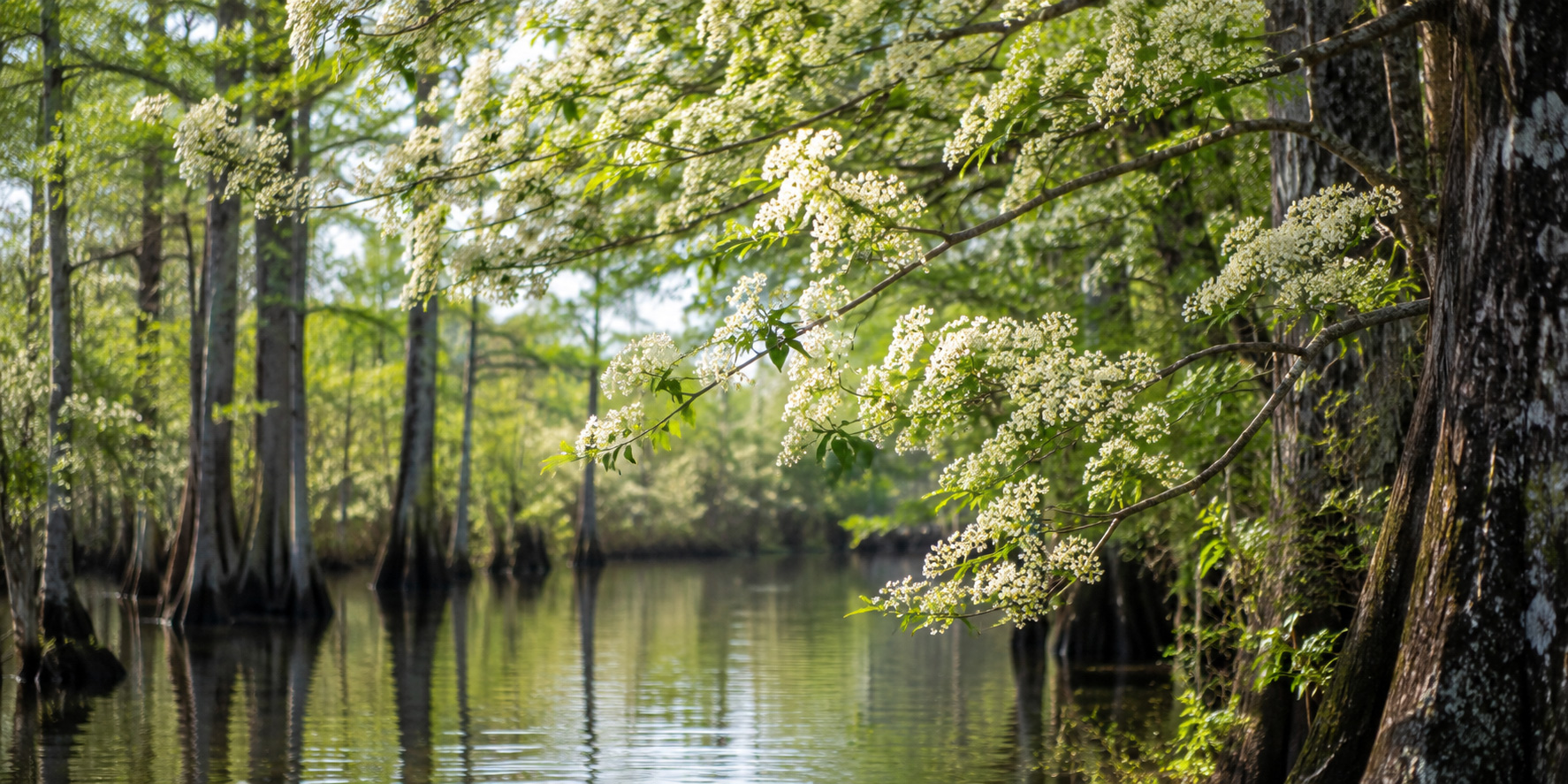
Tupelo trees are native to the riverbanks, wetlands, and swamps of Northwest Florida and parts of Southern Georgia. The Ogeechee Tupelo (Nyssa ogeche), also known as the White Tupelo, produces the nectar used to make authentic raw Tupelo honey. Because the trees bloom for only a short time each spring, the honey harvest is limited and highly valued.
What Is a Tupelo Tree?
The Tupelo tree is a native hardwood tree that grows in the wetlands, riverbanks, and floodplains of the southeastern United States. The species most closely associated with honey production is the Ogeechee Tupelo (Nyssa ogeche), also known as the White Tupelo. It thrives in freshwater environments where seasonal flooding provides the ideal conditions for growth.
Each spring, the tree produces clusters of small white to greenish flowers that are rich in nectar. Honey bees collect this nectar to produce authentic raw Tupelo honey, a variety prized for its light color, smooth texture, and mild flavor. Although several species of Tupelo trees exist, the Ogeechee Tupelo is the primary source of genuine Florida Tupelo honey.
Where Do Tupelo Trees Grow?
Tupelo trees grow naturally in the freshwater swamps, floodplains, and river systems of Northwest Florida and Southern Georgia. Some of the most well known growing areas include the Apalachicola River, Chipola River, and Ochlockonee River basins, where seasonal flooding creates the moist conditions these trees need to thrive.
These river systems provide an ideal habitat for the Ogeechee Tupelo tree, allowing it to produce nectar-rich blossoms each spring. Since these growing conditions are found in only a limited region, authentic Florida Tupelo honey is produced in relatively small quantities, making it one of the most distinctive and sought after honey varieties.
Why Are Tupelo Trees Important for Honey?
Tupelo trees play an essential role in producing authentic raw Tupelo honey. During their spring bloom, the flowers produce abundant nectar that attracts honey bees. As bees gather this nectar and return it to the hive, they create the honey that is known for its light color, smooth consistency, and delicate buttery flavor.
Because the blooming season lasts only a short time, beekeepers carefully place their hives near Tupelo groves before the flowers open. This careful timing helps ensure the bees collect as much Tupelo nectar as possible, resulting in a high quality honey that reflects the unique characteristics of the region.
Why Is Tupelo Honey Rare?
Authentic Tupelo honey is considered rare because the Ogeechee Tupelo tree blooms for only a short period each spring, typically lasting about two to three weeks. The timing and quality of the bloom depend on favorable weather conditions, including temperature, rainfall, and seasonal flooding.
Since Ogeechee Tupelo trees grow primarily in Northwest Florida and parts of Southern Georgia, the areas suitable for producing raw Tupelo honey are limited. Beekeepers must carefully monitor the bloom and position their hives at the right time to collect pure Tupelo nectar. These factors contribute to the limited annual harvest and make Florida Tupelo honey one of the most sought after honey varieties.
How Bees Make Tupelo Honey
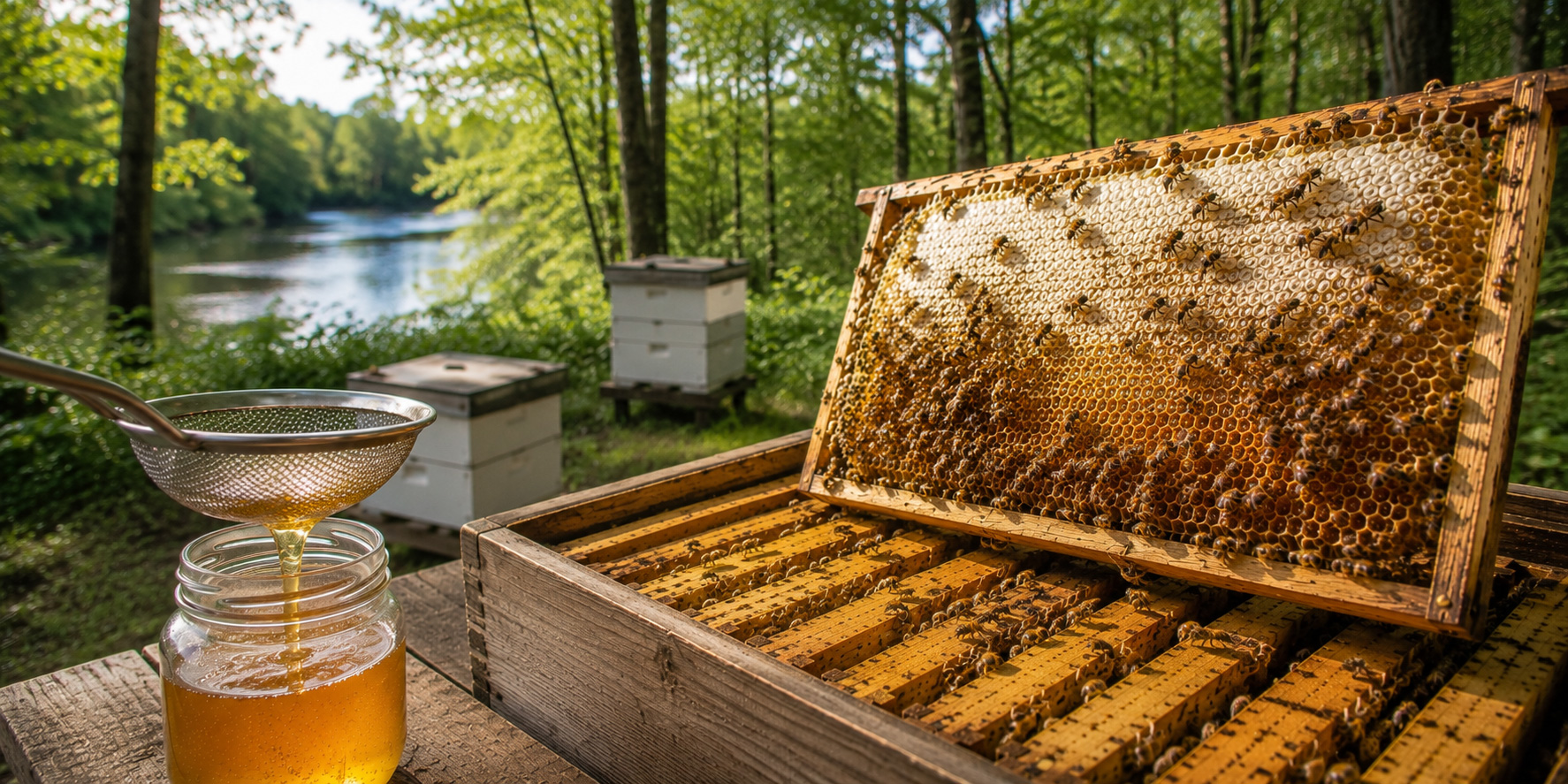
The production of raw Tupelo honey begins when Ogeechee Tupelo trees bloom in the spring. During this short flowering season, honey bees visit the blossoms to collect nectar and carry it back to their hives.
Inside the hive, the bees naturally transform the nectar into honey by reducing its moisture content and storing it in honeycomb cells. Once the honey has fully matured, beekeepers carefully harvest it, strain it to remove natural impurities, and bottle it while preserving its natural flavor and quality. The result is authentic Florida Tupelo honey, known for its smooth texture, mild taste, and premium quality.
Tupelo Trees Compared to Other Nectar Trees
While many flowering trees provide nectar for honey bees, the Ogeechee Tupelo tree is unique because of the exceptional honey it produces. Its short blooming season, limited growing region, and nectar quality help create a honey that is prized for its smooth texture and mild flavor.
| Tupelo Trees |
Other Nectar Trees |
| Grow mainly in Northwest Florida and Southern Georgia |
Grow across many regions |
| Bloom for a short period each spring |
Often have longer blooming seasons |
| Produce nectar for authentic Tupelo honey |
Produce nectar for a variety of honey types |
| Limited annual honey harvest |
Generally larger annual harvests |
| Known for producing premium Florida Tupelo honey |
Produce common regional honey varieties |
Frequently Asked Questions
|
 850-510-6455
 Search
 My Account


